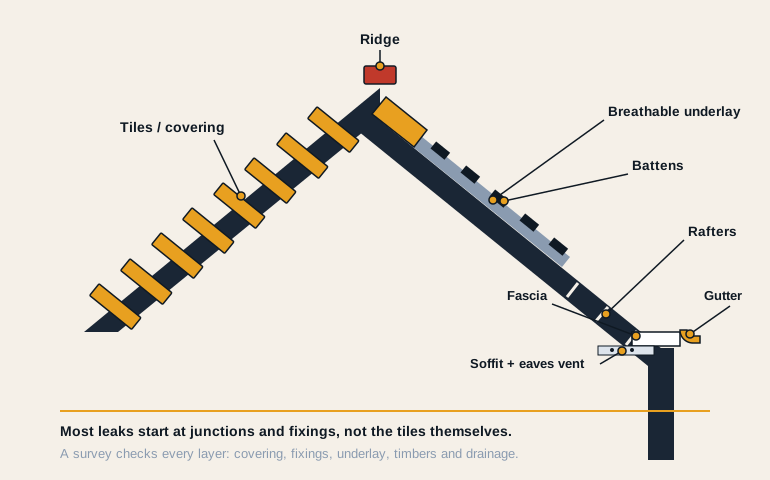
Finding a roof leak is a diagnostic exercise, and the single most common mistake is repairing directly above the damp patch. Water almost never enters where it appears. It comes through high on the slope, runs down the underside of the underlay, tracks along a batten, drops onto a rafter and follows that until something interrupts it. By the time it reaches your ceiling it may be several metres from where it started, and frequently on the other side of the room.
Start in the Loft, Not on the Roof
The roof void tells you far more than the roof surface, and it is considerably safer to inspect. Go up on a dry day with a torch and look at the underside of the roof covering. You are looking for three things: daylight visible through the tile courses, wet or stained underlay, and water marks running down the rafters.
Then trace upward. Follow the staining to the highest wet point you can find — that is where the water is entering, or very close to it. Mark it, and measure from a reference you can identify from outside such as the chimney, a rooflight, or the gable end.
The Failure Points That Cause Most Leaks
Roofs rarely leak through the middle of a sound tile field. They leak at junctions and interruptions, in this rough order of frequency:
Flashings — where the roof meets a chimney, wall, dormer or extension. Lead fatigues and cracks along fold lines; mastic used instead of lead fails within 10–20 years. This is the single most common leak source across every Basingstoke housing type.
Valleys — the internal angle where two slopes meet. These carry the highest water volume on the roof and block easily with debris, which backs water up above the tile lap. Endemic in Chineham, Oakley and Overton where tree canopy overhangs.
Slipped or cracked tiles — usually from nail sickness on the older estates. One slipped tile lets wind-driven rain onto underlay that is often sixty years old and perished.
Ridge and verge — cracked mortar bedding lets water in along the apex or the gable edge. Very common on Brighton Hill and Kempshott where exposure accelerates mortar failure.
Chimney flaunching and pointing — water enters the stack and tracks down the flue, emerging as damp on the chimney breast, often misdiagnosed as rising damp or condensation.
Rule Out What Is Not a Roof Leak
Not every damp patch is the roof. Condensation in a poorly ventilated loft produces widespread light dampness and mould on the underlay rather than a defined drip, and it is worse in winter regardless of rain. A plumbing leak produces damp that is constant rather than weather-dependent. Blocked or overflowing gutters produce damp on the wall below the gutterline rather than the ceiling. Penetrating damp through a wall follows heavy driving rain from one direction.
The test that separates most of these: does it correlate with rainfall, and specifically with rain from a particular direction? If the damp appears within hours of rain and dries between events, it is almost certainly water ingress through the building envelope. If it is constant, look at plumbing. If it is worse in cold weather with no rain, look at condensation and loft ventilation.
Why Professional Diagnosis Is Worth It
A roofer inspecting both the surface and the void can usually locate a leak in under an hour, because they know the failure points and can read the tracking pattern. The alternative — repairing the most likely-looking thing above the damp patch and waiting to see if it works — costs more in aggregate and takes months.
How This Applies to Basingstoke Housing
General roofing advice only takes you so far, because the right answer depends heavily on what your roof is actually made of and when it went on. Basingstoke's housing splits into clear eras and each behaves differently.
The 1960s–70s overspill estates — Popley, Winklebury, South Ham, Oakridge, Buckskin and Black Dam — account for over a third of the town's stock and were roofed with concrete interlocking tiles on iron nail fixings. Those fixings are now 50 to 65 years old and failing across whole slopes at once, because they were all installed within a few years of each other. Anything you read about roof maintenance needs filtering through that: on these roofs the covering is often sound while the thing holding it on is not.
The 1980s–2000s estates — Chineham, Kempshott, Lychpit, Hatch Warren and Beggarwood — have decades of life left in the covering. What fails there is mortar and detailing: ridge and verge bedding, and flashing junctions at dormers and extensions where volume housebuilders used mastic instead of lead. Those are cheap fixes caught early and expensive ones left alone.
Old Basing and the older pockets around the Top of Town are different again. Handmade clay and natural slate last 80 to 150 years, so a century-old roof may have half its life remaining. Conservation area requirements mean matched materials and lime mortar, which changes both the method and the cost.
Getting a Second Opinion
Roofing is one of the few trades where the customer cannot see the work being discussed, cannot watch it happen and cannot properly assess it afterwards. That asymmetry is why comparing quotes properly matters more here than almost anywhere else.
When you compare, look past the headline number. Does each quote include scaffold as its own line? Are materials named by manufacturer, or described vaguely as quality tiles? Is waste disposal included? Is there a written guarantee, and what does it actually cover? A quote £500 cheaper that omits scaffold, new battens and dry ridge is not cheaper — it is a smaller job wearing the same name.
Ask what happens if additional problems appear once work starts. A good answer describes a process: stop, photograph, discuss, agree the cost, continue. A vague answer means you may face charges you did not sign up for.
Where to Get Further Advice
The National Federation of Roofing Contractors publishes technical guidance for homeowners on material selection, standards compliance and choosing a contractor. Your local authority building control team can advise on when notification or approval is required. For conservation area and listed building work in Old Basing or Whitchurch, the Basingstoke and Deane Borough Council conservation officer is the definitive source on acceptable materials.
For anything specific to your own roof, an inspection is worth more than any amount of general reading. Call 0125 624 2410 — advice costs nothing and there is no obligation to book work.
Key Fact: Water penetrating a pitched roof commonly travels along battens and rafters before appearing internally, and diagnosis based solely on the internal damp position is a recognised cause of repeat failed repairs. Source: BS 5250 — Management of Moisture in Buildings
Roof repairs across Basingstoke →
Book a professional roof inspection →
Emergency roofer — 24/7 →
Call 0125 624 2410 — 24/7 emergency line, no call-out fee, same-day attendance across Basingstoke.
Last reviewed: August 2026