Crumbling mortar joints let water into the stack, down the flue and onto your bedroom wall. We repoint with the correct mortar for your chimney's age — flexible cement on post-war stacks, lime putty on anything pre-1920.
Tell us the job in 30 seconds. No pushy sales, no call-out fee.
Chimney repointing in Basingstoke costs £250–£500 on standard estate housing and £400–£800 on period stacks requiring lime mortar. Flaunching renewal adds £150–£300 and pot replacement £80–£200 each. Scaffold, where required, is £400–£800 and is the largest single cost component.
Honest advice
Is Chimney Repairs the Right Fix?
Chimney problems rarely announce themselves at the chimney. They show up as damp on a bedroom wall, and are routinely misdiagnosed as rising damp or condensation.
A damp patch on the chimney breast, usually upstairs first
Mortar fragments appearing on the roof or in the gutter below the stack
Visible gaps between the lead flashing and the brickwork
The mortar cap around the pots cracked or crumbling
White salt staining on the chimney breast internally
When it is not the answer: If the stack is sound and the pots are secure, sealing the flashing alone is often the whole job — a full repoint on a stack that does not need it is a waste of scaffold money. Read the full guide.
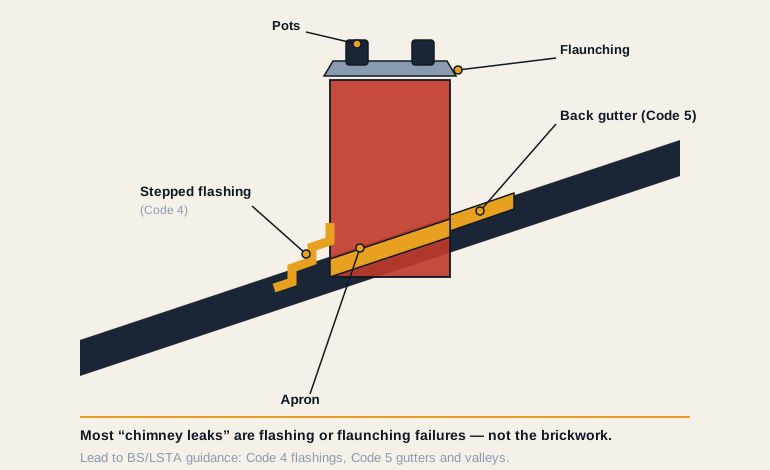
Chimney flashing detail: soakers, step flashing, apron and back gutter
Repointing means raking out failed mortar joints to a consistent depth and refilling them with fresh mortar. It is not skimming new mortar over the old face, which looks acceptable for a season and then falls off in sheets. Done properly, the joint is raked to roughly twice its width, brushed clean, dampened, and filled in layers with the profile matched to the surrounding brickwork.
Flaunching is the sloped mortar bed around the base of the chimney pots. It sheds water off the top of the stack, and when it cracks — which it does, being a large unreinforced mortar surface fully exposed to weather — rain runs straight down into the flue. Flaunching renewal is often needed alongside repointing and shares the same scaffold.
Cowls cap the pot while allowing ventilation. On a working flue they stop rain and birds entering. On a disused flue a vented cowl or capping slab keeps water out while allowing enough airflow to prevent condensation forming inside the stack — which is what causes damp on chimney breast walls in rooms where the fireplace has been sealed up.
Full capping applies where a chimney is no longer used at all. We reduce the stack, fit a ventilated capping slab and weather the junction into the surrounding roof covering. It ends the maintenance cycle permanently.
Local Detail
Chimney Stacks Across Basingstoke
The Overspill Estates: Cement Mortar, Sixty Years On
Chimney stacks on Popley, Winklebury, South Ham, Oakridge and Buckskin were built in the 1960s and 70s with ordinary Portland cement mortar. Sixty years of freeze-thaw cycling on exposed Hampshire chalk downland has eroded the joints, and on the more exposed stacks the mortar has receded 10–15mm behind the brick face.
These take a flexible modified cement mortar — not lime, which would be too soft for the hard machine-made brick used in that era, and not neat OPC, which is too rigid and cracks again within a decade. Typical cost £280–£480 per stack with scaffold.
Brighton Hill and Kempshott: The Exposure Problem
Chimney mortar on the elevated southern estates fails measurably faster than on sheltered ground. These stacks stand above the ridge line of properties that already sit in the most wind-exposed position in Basingstoke, catching wind-driven rain from the M3 corridor on their western face while the eastern face stays comparatively dry. That differential wetting and drying accelerates erosion.
We frequently find the west-facing elevation of a Brighton Hill stack needs full repointing while the east face has another decade in it. We quote the whole stack because doing half means returning within a few years, but we will explain which face is driving the urgency.
Old Basing and the Top of Town: Lime Mortar Only
Victorian and earlier stacks around The Street, Bartons Lane and Belle Vue Road were built with soft handmade brick bedded in lime mortar. Repointing these in cement is actively damaging. Cement is harder and less permeable than the brick around it, so moisture that would previously have evaporated through the joint is forced out through the brick face instead — which spalls, crumbles and loses its fired outer skin permanently.
We use lime putty mortar mixed on site to match the existing by colour and aggregate. It takes longer, cannot be applied in frost or driving rain, and carbonates slowly over weeks. It also lasts and does not destroy the brickwork. Expect £480–£800 per stack, and expect us to schedule it around the weather rather than pressing on regardless.
The maisonette blocks around Roman Road and Saxon Way have multiple stacks on a single roofline. Scaffolding for one stack costs nearly as much as scaffolding for four. Where several owners or a management company can coordinate, per-stack cost drops from around £700 to £400–£500.
Pricing
Chimney Repointing Prices in Basingstoke
Prices include raking out, repointing with the correct mortar specification for your chimney's age, and making good. Scaffold is itemised separately because it varies so widely with stack height and access.
Repointing — estate stack
£250–£500
Flexible cement mortar; post-war brick
Repointing — period stack
£400–£800
Lime putty mortar; Old Basing, Top of Town
Flaunching renewal
£150–£300
Sloped mortar bed around pots; shares scaffold with repointing
Pot replacement
£80–£200 each
Including re-flaunching around the new pot
Cowl fitting
£70–£160 each
Rain and bird protection; vented types for disused flues
Stack capping (disused)
£500–£1,000
Reduce, ventilated capping slab, re-tile the junction
Full stack rebuild
£900–£2,400
Where movement or sulphate attack has compromised the brickwork
Scaffold access
£400–£800
The largest variable; shared across combined chimney work
Multi-stack block (per stack)
£400–£500
Buckskin maisonettes — shared scaffold across the block
Combining repointing, flaunching and flashing renewal on a single scaffold erection typically saves £400–£800 against doing them as separate visits. We always assess the whole stack and tell you what can sensibly be combined.
Key Fact: Building Regulations Approved Document J requires that chimney stacks be constructed and maintained so that products of combustion are safely discharged and that the structure remains weathertight — with defective flaunching and open mortar joints both recognised routes for water ingress into the flue. Source: Building Regulations Approved Document J — Combustion Appliances and Fuel Storage Systems
Free chimney inspection across Basingstoke. We tell you if it can wait.
Clear steps from first call to completed work. No call-out fee, no obligation, and a written quote before anything starts.
1
Free Inspection from Safe Access
We inspect every joint, the flaunching, the pots and the flashing at roof level, and check chimney breast walls internally for damp staining that shows where water is entering.
2
Mortar Specification and Quote
We identify the brick type and original mortar, then specify flexible cement for post-war stacks or lime putty for pre-1920 brickwork. The quote itemises scaffold separately.
3
Scaffold and Rake Out
Joints are raked to roughly twice their width and brushed clean. Skimming over old mortar is not repointing and we do not do it.
4
Repoint, Weather and Handover
Mortar is filled in layers, the profile matched to surrounding brickwork, and the work photographed. Lime work is scheduled for suitable weather and left to carbonate properly.
Ready to start? Call 0125 624 2410 for your free survey.
The process
From First Call to Sign-Off
1. Free inspection from safe access
Every mortar joint, the flaunching, the pots and the flashing checked, plus the chimney breast internally to trace where water is actually entering.
2. Written report and quote
Photographs of what we found, with the mortar specification chosen for your stack's age — flexible cement on post-war brick, lime putty on anything pre-1920.
3. Scaffold
Safe chimney work needs scaffold, not ladders. It is the largest single cost and we itemise it separately so you can see it.
4. The repair
Repointing, flashing renewal, flaunching or pot work — combined where sensible so one scaffold erection covers everything.
5. Sign-off
Work photographed from the scaffold before it comes down, site cleared, guarantee issued.
Timescales
Typical Timescales
Job
Typical duration
Flashing renewal only
1 day
Repointing, single stack
1–2 days
Flaunching and pot replacement
1 day
Combined repoint and flashing
2 days
Full stack rebuild
3–5 days
Lime mortar cannot be applied in frost or driving rain and needs weeks to carbonate. We schedule Old Basing and Whitchurch heritage work around genuine weather windows.
Access
Access, Scaffolding & Permits in Basingstoke
Chimney work requires scaffold in effectively all cases. Scaffold is specified for: every chimney job — working from a ladder at stack height makes proper raking out and consistent joint filling impossible - always itemised in your written quote, never a hidden extra, and we arrange it.
Most Basingstoke estate housing has generous verges and driveway space, so scaffold and skips drop straight onto private ground. The older streets around the Top of Town are the exception, with narrow frontages and controlled on-street parking. Pavement scaffold and skip permits go through Basingstoke and Deane Borough Council; allow a few working days on streets like Wote Street, Church Street, New Street where space is tight.
Pricing
What Chimney Repairs Costs in Basingstoke
Job
Typical range
Notes
Repointing — estate stack
£250–£500
Flexible cement mortar, post-war brick
Repointing — period stack
£400–£800
Lime putty mortar, Old Basing and Whitchurch
Flaunching renewal
£150–£300
Shares scaffold with repointing
Pot replacement
£80–£200 each
Including re-flaunching
Flashing renewal
£320–£700
Code 4 lead, stepped and chased
Stack capping (disused)
£500–£1,000
Reduce, ventilated cap, re-tile junction
What moves the price
Scaffold, which is the single largest cost component on almost every chimney job
Mortar specification — lime work is slower and the material costs more
Stack height and how many faces need attention
Whether repointing, flashing and flaunching can share one scaffold erection
Conservation requirements on Old Basing and Whitchurch stacks
Worked example: Repoint plus new flaunching on a 1970s stack on Kenilworth Road, Winklebury: £560 including shared scaffold across both elements, two days on site.
A 10 to 20% deposit covering scaffold hire, balance on completion. No payment before the scaffold is standing. All prices include VAT.
Covering RG21, RG22, RG23, RG24 and surrounding postcodes.
Guarantee
The Guarantee in Plain Terms
Repointing and flashing work carries our 10-year workmanship guarantee. Correctly specified lead should outlast that several times over.
Covered: workmanship for 10 years, in writing, transferable if you sell.
On top: manufacturer warranties on materials (terms vary by product).
Not covered: storm or impact damage - that is an insurance matter, and we will document it for your claim.
If a fault appears in covered work, we come back and put it right. No quibbling, no re-charge.
Good to know
Living Around the Work
Scaffold for the duration and some mortar debris. We sheet the roof below the stack and clear everything before the scaffold strikes. You do not need to stay home for external work - we just need power and access agreed in advance.
Cement mortar work runs most of the year. Lime work is weather-dependent and we will tell you honestly if a job needs to wait for the right conditions. Basingstoke sits on chalk downland at around 80 metres, so drying is quick after rain but frost nights run longer than the Hampshire coast.
Customer Reviews
What Basingstoke Homeowners Say
★★★★★
"Mortar was falling out of our stack in lumps onto the patio. Full repoint plus new flaunching for £560 with the scaffold shared between both jobs. Looks solid and the damp patch upstairs has gone."
Brian L. · Kenilworth Road, Winklebury
★★★★★
"They explained why our Victorian cottage needed lime mortar rather than cement, and what cement would have done to the brickwork. Nobody else who quoted even mentioned it. £680 and done properly."
Jonathan P. · Bartons Lane, Old Basing
★★★★★
"West face of our stack was shot, east face was fine. They quoted the whole thing but explained exactly why. Living up here you learn the west face takes everything."
Tony G. · Pack Lane, Kempshott
FAQ
Frequently Asked Questions
£250–£500 for a standard estate stack in flexible cement mortar, or £400–£800 for a period stack requiring lime putty mortar. Scaffold access adds £400–£800 and is the largest single variable.
Repointing addresses the mortar joints specifically — raking out failed mortar and refilling. Chimney repair is the broader category covering flashings, flaunching, pots, capping and structural work. Many stacks need repointing plus one or more of the others, and combining them shares the scaffold cost.
If your stack is pre-1920s soft handmade brick, cement mortar is harder and less permeable than the brick around it. Moisture that would evaporate through a lime joint is instead forced out through the brick face, which spalls and permanently loses its fired outer skin. Lime protects the brick; cement destroys it.
Twenty to thirty years on a sheltered estate stack in flexible cement. Fifteen to twenty on exposed positions like Brighton Hill and Kempshott. Lime mortar on period stacks typically runs twenty-five to forty years and can be repaired in sections rather than wholesale.
Not safely or to a decent standard. Working from a ladder at stack height makes proper raking out and consistent joint filling impossible, quite apart from the safety issue. Scaffold is a genuine cost, not an upsell.
If you are certain you will never use it, capping is usually the better economics. Reducing the stack and fitting a ventilated capping slab costs £500–£1,000 and ends the maintenance cycle permanently. The ventilation matters — sealing a flue completely causes condensation and damp on the chimney breast.
Very often, yes, and it is frequently misdiagnosed as rising damp or condensation. Failed pointing, cracked flaunching and defective flashing all allow water into the stack, where it tracks down the flue and emerges on the chimney breast — usually upstairs first. A chimney inspection settles it quickly.