Leadwork
Roofing Leadwork in Basingstoke
Every roof has vulnerable points where different surfaces meet — chimney stacks, dormer windows, abutment walls, valleys, and soil vent pipe penetrations. At each of these junctions, lead sheet is dressed and fitted to prevent water ingress. When this lead fails — through fatigue, thermal cycling, poor original installation, or sheer age — leaks appear in the most damaging locations: directly into living spaces and structural timbers.
Lead Flashing on Basingstoke's Estate Housing
On the 1960s–70s estates, original lead flashings are now 50–60 years old. Code 3 lead was commonly used — thinner than today's standards — and after decades of expansion and contraction it develops fatigue cracks, particularly on south and west-facing elevations where thermal cycling is greatest. Brighton Hill and Kempshott, with their elevated, sun-exposed positions, see accelerated lead fatigue compared to sheltered estates like Black Dam.
On newer 1980s–90s estates like Chineham and Lychpit, some builders used mastic sealant or lead substitute products instead of proper lead. These are now failing at 25–35 years — well ahead of the tiles around them. We strip these out and fit proper code 4 lead.
Heritage Leadwork in Old Basing
Period properties around Old Basing and the Top of Town require heritage-standard leadwork. Original 18th and 19th century lead was often thicker gauge, hand-cast, and patinated over decades. We work with code 5 and code 6 lead for heritage applications and apply patination oil to match the appearance of surrounding historic leadwork. Conservation area requirements are fully understood and met.
Lead Valley Replacement
Valleys channel the highest volume of water on any roof. A failed lead valley causes immediate and often severe water ingress. Across Basingstoke's estates, original valley linings are failing due to both age and debris accumulation from the maturing tree canopy. We strip and reline valleys with new code 4 or code 5 lead, properly dressed with adequate laps and splash guards.
How We Work With Lead in Basingstoke
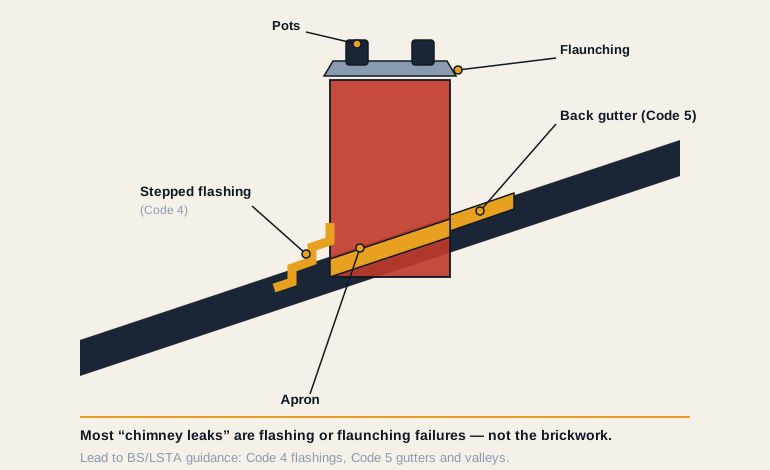
All our leadwork follows the Lead Sheet Association code of practice. We use code 4 lead (1.80mm) minimum for flashings and code 5 (2.24mm) for valleys and heritage applications. Lead is cut, dressed and bossed on site to fit the exact geometry of your roof junction — never pre-formed off site and forced into position. Step flashings are cut individually for each tile course, turned into chased mortar joints, and secured with lead wedges before pointing.
Apron flashings are dressed over the tiles below with adequate lap and dressed tight to the wall above with a minimum 75mm upstand. Every joint accounts for thermal movement — lead expands and contracts significantly, and work that ignores this cracks within a few years regardless of material quality.
Why Lead Code and Technique Matter
Every shortcut in leadwork becomes a future leak. Mastic sealant instead of lead lasts around ten years, not fifty. Self-adhesive lead-effect tape lifts under thermal cycling. Mortar fillets instead of proper flashings crack within five years on exposed positions. Code 3 lead, still used by some contractors to save material cost, fatigues far faster than code 4 and has no place in a permanent repair. over a third of the housing stock dates from the 1960s–70s overspill expansion, so the same failures recur across entire streets.
Heritage Leadwork
Period properties require heavier gauge lead and traditional techniques. We use code 5 and code 6 for heritage applications and apply patination oil so new lead weathers to match surrounding original work rather than staining the masonry beneath. Where conservation area or listed building consent applies, we discuss specifications with the conservation officer before starting work.
Leadwork Costs in Basingstoke
Chimney flashing replacement: £300–£700. Dormer re-flash: £400–£800. Valley relining: £500–£1,200 per valley. Heritage leadwork quoted individually. Call 0125 624 2410.